
Let's take a closer look at some of Lady Gaga's most iconic looks throughout the years.
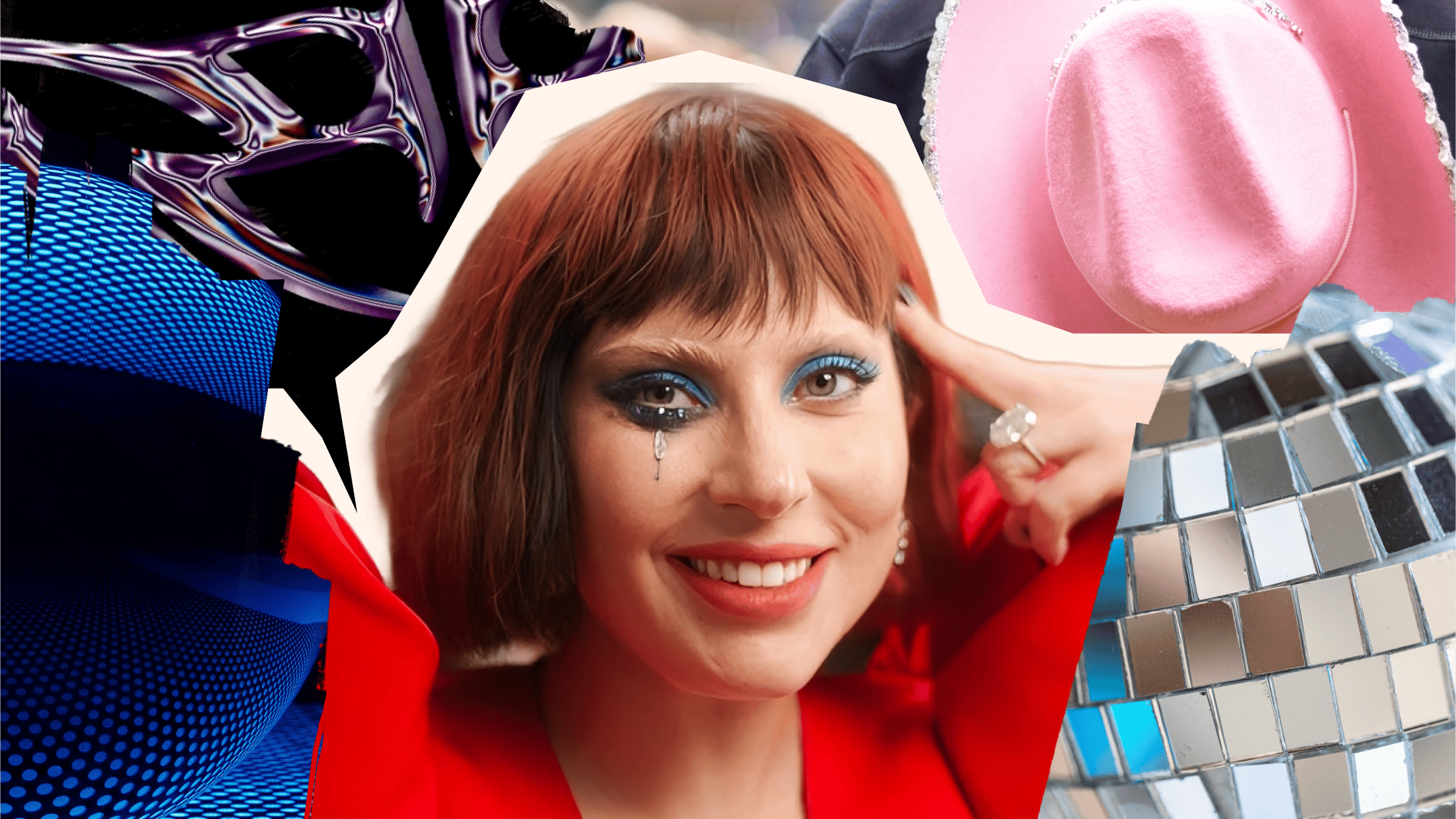


Mother Monster is returning with Mayhem… a new, darker era. We’re here for it. Let’s deep-dive into Lady Gaga’s aesthetics, fashions, stunts, and art.
The 2000s are memorable for giving us iconic pop music and unforgettable fashion moments from artists like Beyoncé, Britney Spears, Rihanna, and Katy Perry. Low-rise jeans, extremely short skirts, crop tops, and rhinestones defined the era’s style among female pop stars. Then came a fashion surge of Lady Gaga’s iconic looks…
After 2008, everything changed. Lady Gaga, a new force in the music scene, brought a completely different approach to pop music and fashion. Campy outfits replaced predictable trends, over-the-top music videos became her trademark, and bold choreography paired with a fresh, unforgettable sound.
Lady Gaga didn’t just redefine the industry; she’s a cultural game-changer, inspiring a generation of musicians and reshaping pop aesthetics.
What are Lady Gaga’s aesthetics?
From her early days of shocking and provocative outfits to her recent embrace of sophisticated elegance, Gaga’s style evolution mirrors her journey as a musical artist. Get ready to explore the iconic looks that have defined her career, from the infamous meat dress to her breathtaking red carpet gowns, and uncover the inspiration and messages behind each unforgettable era This is a deep dive into the ever-evolving and captivating world of Lady Gaga’s aesthetics and musical evolution.
2008–2009: The Fame era
The Fame was the first of many Lady Gaga albums. Gaga blended electro-pop and synths to create a dance album with a touch of theatricality and star quality.
The album explores Gaga’s obsession with fame, money, celebrity culture, and glamor while revealing its darker side tied to themes of love, lust, and escapism through partying. Gaga felt famous long before it was her reality, and that’s at the heart of the album—faking it until you make it.

From the beginning, we could tell Lady Gaga was an artist who knew her references and made subtle homages to past pop icons while maintaining her essence and bringing fresh ideas to the table.
In The Fame, we see a lot of whites, silvers, and metals, draped hoods, lightning-bolt eye makeup, and mirrored masks and dresses, which relate to the theme of fame itself—glamorous, shiny, futuristic, and often otherworldly. She also incorporates pops of color, like electric blue and red. You can also see how she took inspiration from other artists during this era, like David Bowie and Grace Jones.
2009–2011: The Fame Monster era
Just a year after her debut album, Lady Gaga was already a superstar. The Fame catapulted her to global success and pushed her into creating The Fame Monster. This album spoke about the darker side of fame, lyrically represented with a monster metaphor.
The Fame Monster’s sound blended electropop, disco, glam rock, synth-pop, and industrial influences with gothic undertones. This mix flawlessly matched the album’s aesthetic, which featured a darker, edgier, and more gothic vibe, helping to create a staple Lady Gaga fashion look.

Lady Gaga and her iconic looks were defined in this era by bold and fun headpieces, glasses, crosses, and religious motifs. The color palette is mainly black and white, with fun yellow, gold, red, and blue pops. Gaga started using different materials like plastic, vinyl, and unconventional textiles.
Her popularity helped her create timeless Lady Gaga fashion in collaboration with some of the most successful designers. During this period, we saw Lady Gaga and Alexander McQueen work together, making the famous Lady Gaga armadillo shoes that became famous after she wore them in the “Bad Romance” music video.
Lady Gaga fashion—honorable mentions from this era
There are dozens of iconic red carpet looks and outfits from various events during this era. But there’s one that will possibly mark her career forever: Lady Gaga and her meat dress.
While the Lady Gaga meat dress is from around this era, it’s not particularly part of The Fame Monster aesthetic.
Why did Lady Gaga wear a meat dress?
Lady Gaga picked the legendary meat dress to accept her Video of the Year award for Bad Romance at the 2010 MTV VMAs. This particular outfit was a protest against the United States military’s “Don’t Ask, Don’t Tell” policy, which she believed dehumanized LGBTQ+ people by treating them as if they were just pieces of meat.
At this event, Lady Gaga and Alexander McQueen gave us another fashion moment, the iconic and dramatic red lace dress with a spiked headpiece.
2011–2013: Born This Way era
The Born This Way era was a massive moment for Gaga. The album changed her career—not just because she grew so much as an artist but also because she became a powerful voice for the LGBTQ community.
She pulled inspiration from legends like Madonna, Whitney Houston, Bruce Springsteen, Kiss, TLC, and Prince but made the album her own. The result? A sound that still feels fresh and timeless today.

Born This Way is about liberation—the ability to love, express yourself, and be proud of who you are. It covers equality, sexuality, individualism, religion, and feminism. For the LGBTQ community, it was more than simply an album; it was an emblem of self-acceptance that empowered many people to embrace themselves without fear.
Visually, Born This Way made an unforgettable statement. Gaga introduced a bold punk-rock energy while experimenting with unconventional materials like latex, prosthetics, skull makeup, and even slime. At the same time, she played with softer aesthetics such as pastel pinks, lavenders, and teals and wore wigs in sleek and exaggerated styles.
Lady Gaga fashion—honorable mentions from this era
We couldn’t close this chapter without mentioning some of Lady Gaga’s iconic looks from the Born This Way era.
Some might remember the first look as the Lady Gaga egg dress, but it was actually an egg-shaped pod. Gaga stayed inside it for three days before the event and was carried down the red carpet in the egg until she “hatched” during her performance at the 2011 Grammys.
Instead of seeing Lady Gaga in an egg dress as many had expected when she “hatched” on stage, she wore a transparent latex dress with prosthetics, pointy shoulders, and a ponytail—simply iconic.
The second look differs significantly from the Lady Gaga aesthetic we’re used to seeing. She introduced us to Jo Calderone, a masculine alter ego and drag king persona that allowed Gaga to challenge traditional gender roles and explore fluidity, viewing gender as performative and fluid rather than fixed or binary.
2013–2015: Lady Gaga and Artpop era
With Artpop, Gaga set out to push her creative boundaries, diving into bold concepts, themes, and ideas. The album captures her journey to discover authenticity beyond her stage persona while exploring topics like fame, sex, and self-empowerment.
Much like its themes and concepts, the music on ARTPOP is diverse and experimental. It stands apart from her previous work, as it leans heavily into EDM and synthpop, giving the album a distinct sound compared to her earlier releases.

Lady Gaga’s Artpop blended influences like Greek and Roman mythology, Renaissance and modern art, and the iconic blue gazing ball by Jeff Koons. Her looks also featured seashell bikinis, 70s disco-inspired outfits, and various brown wigs, from big curls to straight styles. Her street fashion became more bold and artistic throughout this era.
This era was challenging for Gaga as she faced a hip injury, limited album promotion, backlash over her R. Kelly collaboration, and criticism of the album’s commercial performance. When Artpop was first released, it was widely underrated—perhaps because its ambitious concepts and numerous ideas overwhelmed listeners, making it difficult to fully connect with at the time. Nevertheless, Artpop remains one of her best works to date.
Lady Gaga fashion—honorable mentions from this era
Lady Gaga and Versace were a prominent duo during this era. Gaga not only worked with the brand but also became the face of Versace during their 2014 campaign. On top of that, Lady Gaga wore Versace outfits that channeled Donatella Versace, her close friend and a key inspiration behind Artpop.
2016–2020: Joanne
Raw, stripped-down, and infused with Americana, country, and rock influences, Joanne marked a major shift from Gaga’s previous work.
Family is the central theme in Joanne, deeply influenced by the death of Lady Gaga’s aunt, Joanne Germanotta. The album has emotional themes like identity, loss, nostalgia, and heartbreak.

Gaga’s previous collaboration with Tony Bennett and her immersion in the jazz genre gave her greater confidence in her voice, allowing her to emphasize her vocals more intimately and rawly throughout the album.
For this era, her style shifted to something softer and grounded. Pastels like pink and blue took center stage, paired with whites, silvers, and blacks. She rocked wide-brimmed hats, tailored suits, and a mix of suede, denim, and leather shorts. The look had a country vibe but still carried her signature rock-pop energy.
Lady Gaga fashion—honorable mentions from this era
This was a massive era for Lady Gaga. Lady Gaga at the Met Gala truly stands out between her incredible Super Bowl performance and jaw-dropping appearances. Surprisingly, Lady Gaga has been to the Met Gala just four times, but she made each one unforgettable. In 2019, she stole the show with four stunning outfit changes, all revealed from a single look!
2020–2024: Chromatica era
The Chromatica era marked Gaga’s highly-anticipated return to her dance-pop roots—a moment her fans had been waiting for. And what better way to do it than with a concept album packed with infectious dance tracks and three iconic collaborations with top artists?
The idea behind Chromatica centers on a utopian, fantastical planet where warrior tribes unite for peace and healing through music and dance. The title combines the musical term “chromatic,” which refers to a 12-pitch scale, with “chroma,” meaning color.

All of Lady Gaga’s outfits from this era are influenced by Y3K fashion, which is all about how fashion might look in the year 3000. The style takes elements from cyberpunk, sci-fi, futurism, the digital world, and technology. It features elements like silver, metallics, black and white colors, and bold accessories.
At its core, Chromatica is about finding harmony in diversity—a celebration of individuality and unity where all sounds and colors come together.
Gaga’s visual aesthetic for this era drew heavily on futuristic graphic design, fashion, and cyberpunk influences. She embraced warrior-like looks with metallic details, sharp silhouettes, bold shoulders, avant-garde hairstyles, and alien-inspired accessories. Neon pink, neon yellow, green, and black were the dominant colors in her striking and dramatic wardrobe.
Lady Gaga loves creating fantastic music videos for her fans. During this era, she released the video for “911.” It’s a surrealistic masterpiece filled with symbolism and references from the film The Color of the Pomegranates by Sergei Parajanov. Here, Lady Gaga and her fashion choices go above and beyond, giving us bold colors, beautiful makeup, and a must-watch video.
2025: Mayhem era
Gaga’s new album, Mayhem, drops on March 7, and we couldn’t be more excited for new music—and, of course, more iconic Lady Gaga fashion. She has described this record in recent interviews as “dark, poetic, and hard” with a chaotic edge, and we’ve seen it.
With the release of the single “Disease,” we have a sound that’s classic Gaga but with a fresh evolution. It blends dark pop, dance beats, techno vibes, and moody synths. You can also hear rock, gothic, grunge, and industrial influences.
For the music video, Gaga’s aesthetic takes an even darker turn. The visuals explore her inner demons and how they travel into a spiral of overwhelming emotions, forcing her to confront the inevitable parts of herself. Dropped just before Halloween, the timing couldn’t have been better.
And let’s not forget “Die With a Smile,” her emotional ballad with Bruno Mars—the track that won them a Grammy. In her acceptance speech, Gaga used the moment to advocate for trans visibility, saying, “Trans people deserve love. The queer community deserves to be lifted up.” She didn’t stop there—she kept the momentum going by dropping her next single and music video, “Abracadabra,” during the event.
And what can we say about “Abracadabra”? It’s everything Gaga fans hoped for—a touch of old-school Gaga, which she delivered. The video features a high-stakes dance battle between life and death, set in a brutalist setting, with Mother Monster as both judge and spectator.
It has killer choreography, top-tier looks, and a sound that follows the industrial-dance direction of “Disease” while blending even more genres. As she told The Los Angeles Times:
“The record is full of my love of music—so many different genres, so many different styles, so many different dreams.”

And The Fame will continue…
From Lady Gaga and her meat dress to her daring fashion statements in every era, Gaga has always been about breaking boundaries in music and style. As she gears up for her next chapter with LG7, one thing’s for sure: she’ll keep surprising us in ways only she can.
Explore more Lady Gaga design inspiration on Envato with our curated collection of assets to help you get the look. Learn more about the intersection of music and design by reading our post on album cover art.


