
Explore Vincent Van Gogh's art through his most iconic paintings and their influence in pop culture.


Want to tap into the Vincent van Gogh art style influence? Explore his most iconic paintings, from impasto texture to bold color choices.
One of the best artists of all time, Dutch artist Vincent van Gogh’s post-impressionist masterpieces left a lasting influence on society. Despite his current popularity, he sold only one painting in his lifetime and famously struggled with artistic success and mental health.
His impact after his death ranged from pop culture to commercial artwork and artistic movements, including abstract expressionism. The highly recognizable Vincent van Gogh art style is characterized by frenzied, layered brush strokes that create texture depth and bright, unconventional color combinations that reveal raw emotion and subjects of daily life, mostly in southern France.
So what was Vincent van Gogh’s art style, and how can we measure its impact on today’s designs and aesthetics? Let’s find out!
The Starry Night (1889)

The Starry Night (1889), Vincent van Gogh’s most famous painting, is an artistic study of the view from his window at the mental asylum at Saint-Rémy-de-Provence. After chopping off part of his left ear and checking himself into a mental asylum, he created this iconic work of art that remains one of the world’s most valuable paintings.
Vincent van Gogh’s incredibly intertwined life, art, and emotional state originated influential, world-renowned paintings and a cautionary tale of the tortured artist that spurs conversations about art and mental health.
The Starry Night style is characterized by a color scheme, vibrational texture, and emotional resonance that still shines through in the painting’s continuing use in pop culture and commercial products. Breathtaking blues and illuminating yellows bring life and movement to the painting, emphasized against the steadfast greens and tenebrous browns.
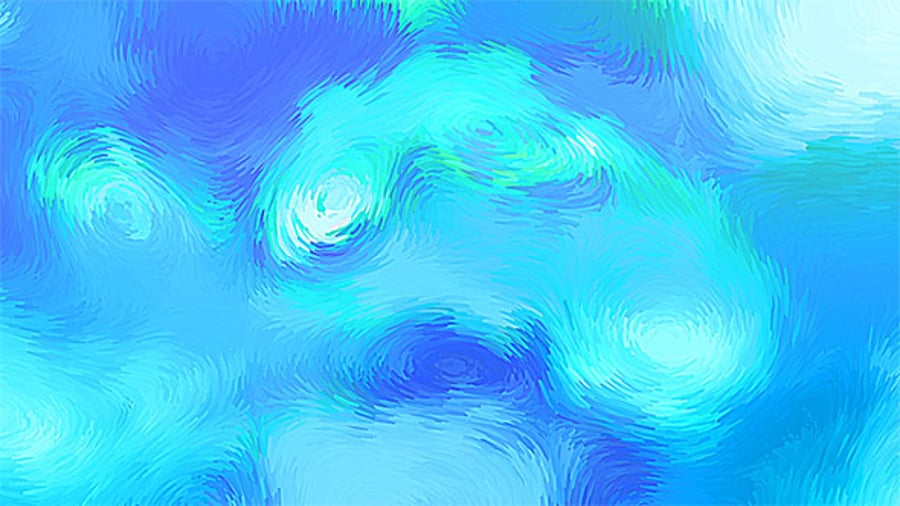
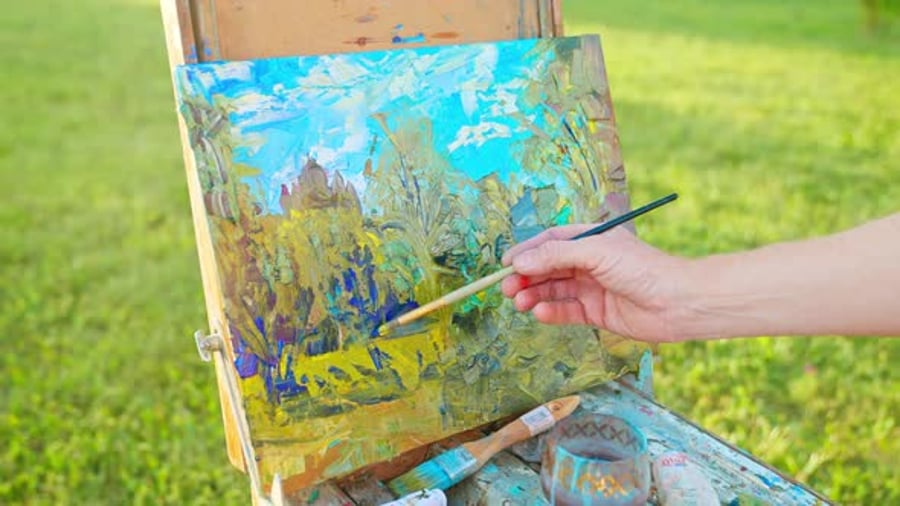
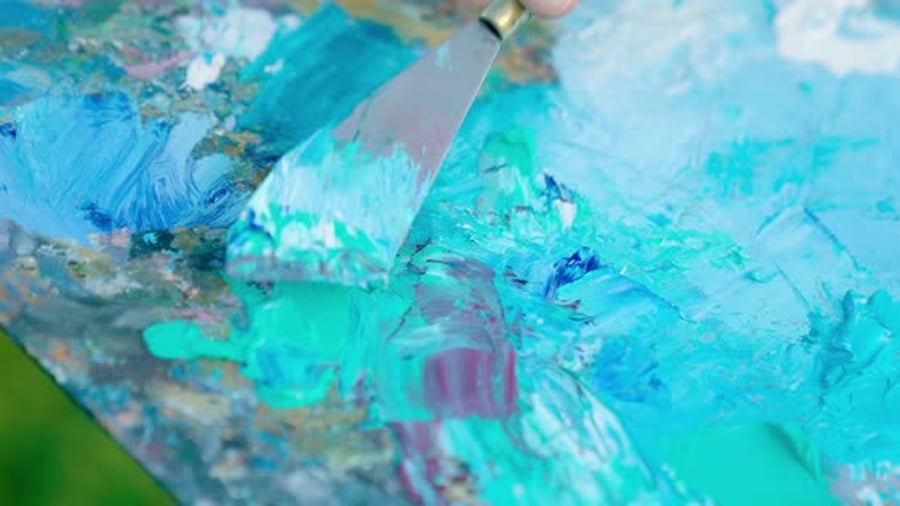
Vincent van Gogh’s aesthetic uses the impasto technique, in which thick layers of paint are applied to the canvas, adding to the swirls in the sky’s dynamic movement.
Companies such as Hot Sox, Joann’s, Selkie, and Quality Tapestries all celebrate the art in various forms, including socks, embroidery kits, dresses, and throws. A light is also shone on Van Gogh’s precursor to The Starry Night: Starry Night Over the Rhône (1888), in Black Milk Clothing’s Sheer Midaxi Dress.
With its mastery of short, directional brush strokes, impasto technique, and mood-tingling color choices, The Starry Night remains one of the best-known paintings in history.
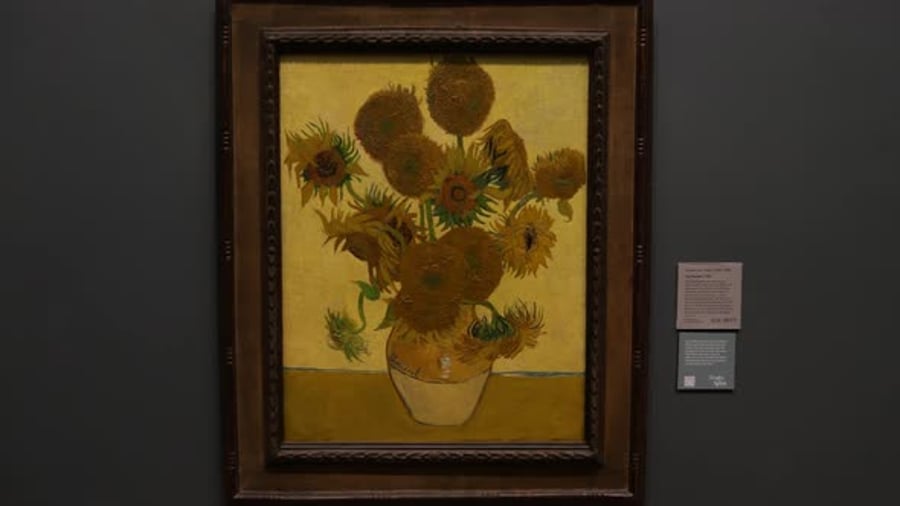
Sunflowers (1888)

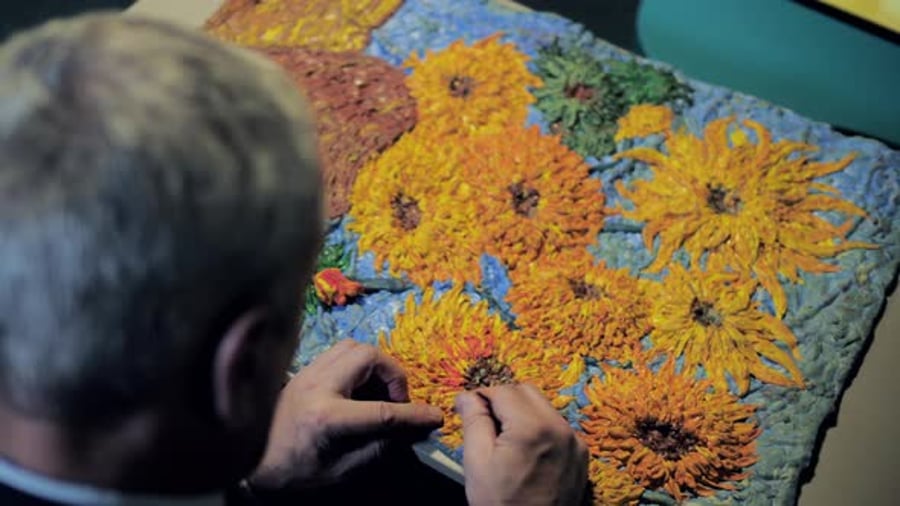
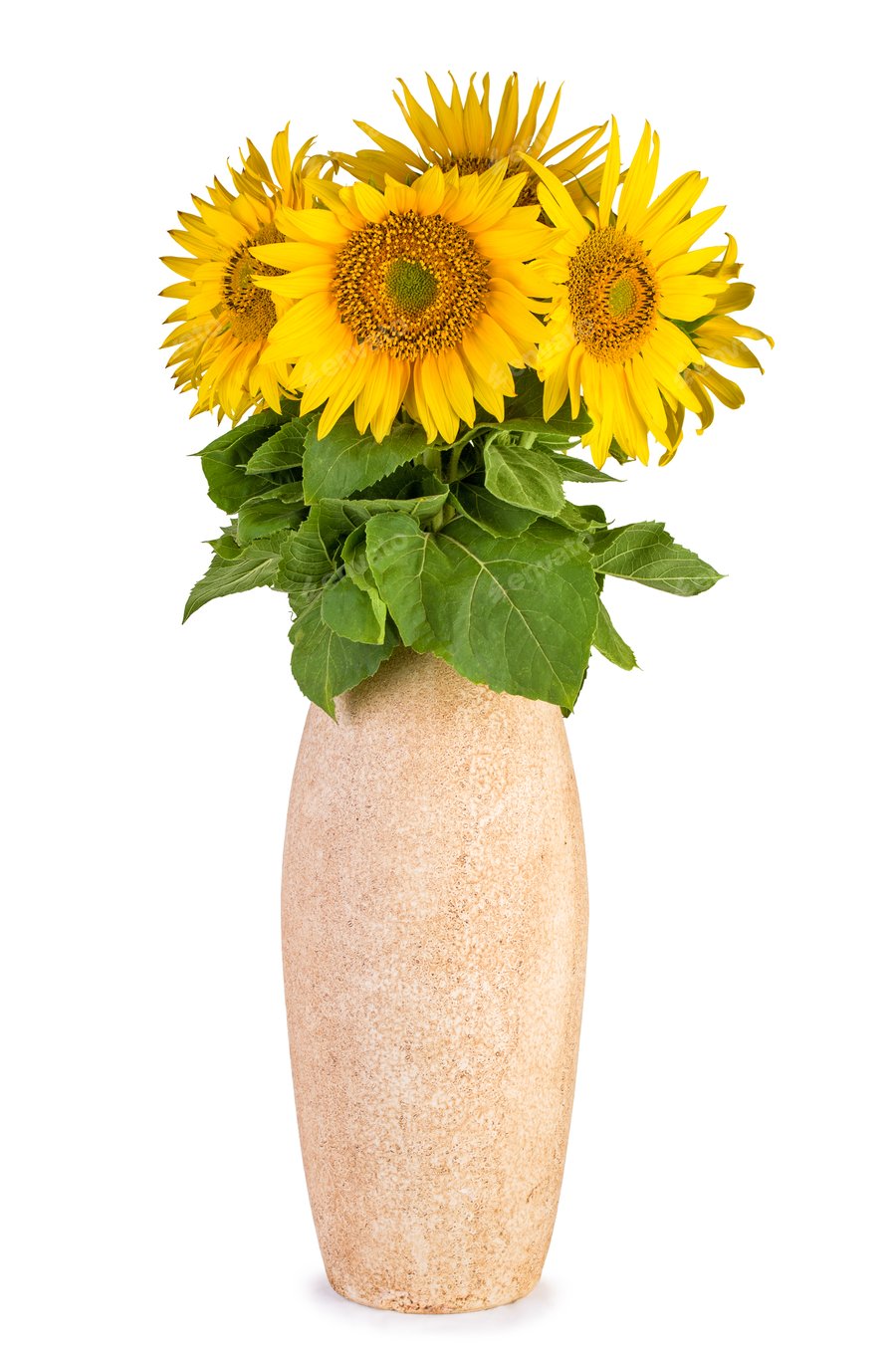
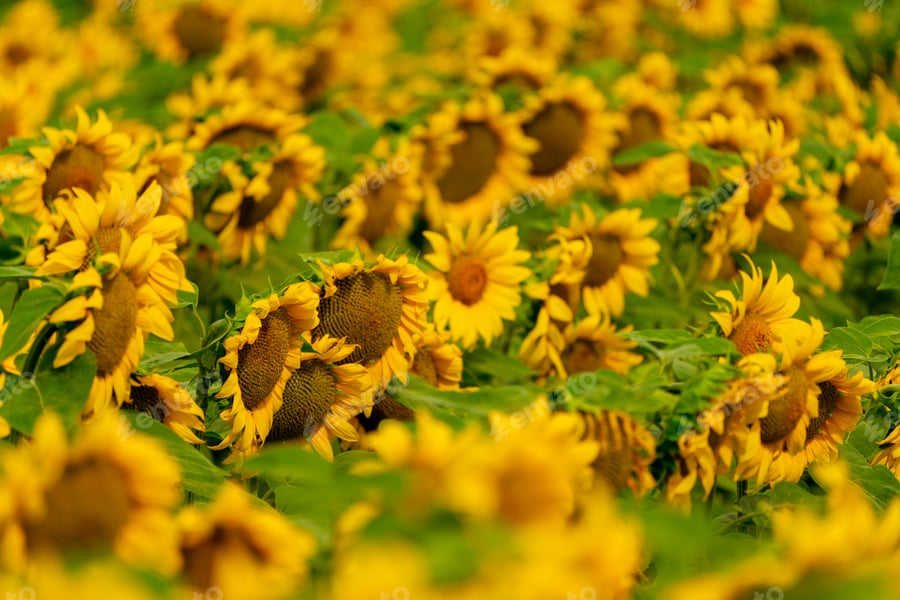
Van Gogh’s Sunflowers (1888) appear in two series of still life paintings: one series (1887) where the flowers lie on the ground and a more well-known series (1888) of sunflowers in vases. In Van Gogh’s repeated subject matter, his love of shades of yellow, delicious texture, and mood formation are clear. In his sunflower series, he proved it possible to create a painting in variations of one color and invented new colors using what was available then. He mixed cadmium yellow and vermilion for the bright orange color in his sunflowers.
We can trace the Vincent Van Gogh aesthetic in many contemporary collaborations: folding travel umbrellas by RainCaper, sunflower pop-up bouquets by the Getty Museum, and sunflower skateboard decks by Artware.
Bedroom in Arles

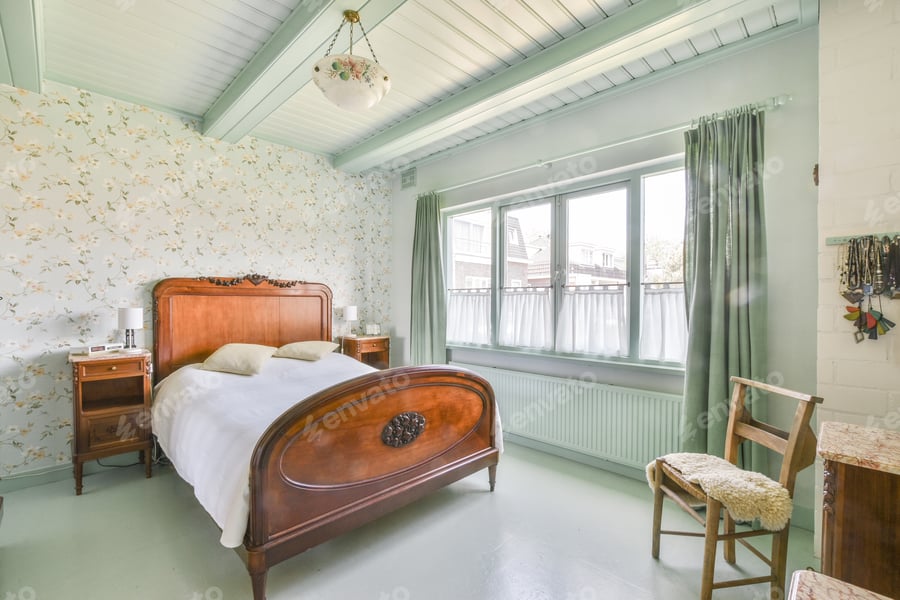
A series of three similar paintings, Bedroom in Arles, depicts Van Gogh’s bedroom at the Yellow House, the first place that felt like home to him. Ever intertwined, Van Gogh’s drawing style and life combined again to create this series, inspired by being bedridden for days.
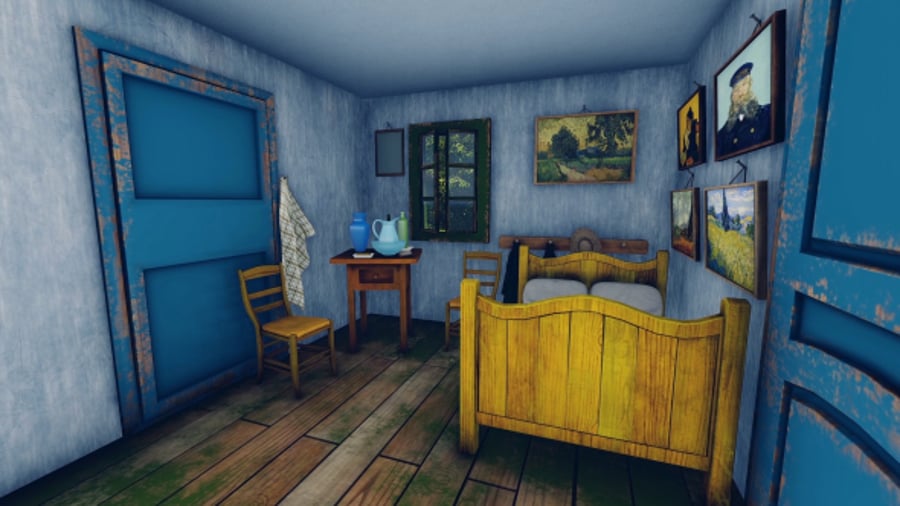
While the colors we see today are a soft palette of cool greens, light blues, and a red pop, Van Gogh’s letters tell us that the walls were originally a pale lilac, changing the overall tone to comfortable sleep rather than garish unease.
The detail and layout of Bedroom in Arles lends itself to puzzles by Joann’s, Stanford University, and the Getty Museum, as well as to pop-up cards by Today is Art Day.
Café Terrace at Night (1888)

A fan and film favorite, Café Terrace at Night (1888) appears in Lust for Life (1956), starring Kirk Douglas, season five of Doctor Who, and Loving Vincent (2017), the fully painted film honoring the aesthetic of Van Gogh’s drawing style.
The colors in the night café painting are best described by Van Gogh himself:
“This is a night painting without black, with nothing but beautiful blue and violet and green and in this surrounding the illuminated area colors itself sulfur pale yellow and citron green”.
Van Gogh’s tendency to play yellow and blue against each other is especially seen in Café Terrace at Night. The lively scene evokes the joy he felt being part of the nighttime scene.
Van Gogh Self-Portrait

Van Gogh painted over 35 self-portraits in his lifetime, 25 of which were created in Paris. Rendered for practice and not for vanity, these portraits reveal pieces of his personality and show how he saw himself.
His self-portraits also act as a great way to see his progress as an artist, first creating incredibly dark backgrounds and subjects and later moving towards lighter, more vibrant backgrounds and techniques and becoming the Van Gogh drawing style that the world now recognizes.
Three of the portraits depict his mental illness, painted after his self-mutilation incident. He believed that by painting himself in this way, he could heal. These portraits solidified parts of what we know about Van Gogh, from his mental difficulties to his love of yellow and his straw hat.
In viewing all these portraits, the audience can see his growth both artistically and personally, which humanizes him as a historical figure. Recent collaborations replace his self-portraits and other works with Pokémon characters, creating an experience for young audiences to feel more connected.
Van Gogh’s aesthetic has become a worldwide influence and inspired many gallery showings and experiences, including the Van Gogh Exhibit: The Immersive Experience, which fills a gigantic room with his art projected onto the walls.
Recreate Vincent van Gogh’s unique style and influence in your work!
Van Gogh’s work has become a household name and an inspiration to artists everywhere. Now that you know what Vincent van Gogh’s art style was, you can use assets from Envato to recreate the impact of his work in your own projects! Read An Open Discussion About Art and Mental Health and Art History: Impressionism if you want more information and inspiration.


